
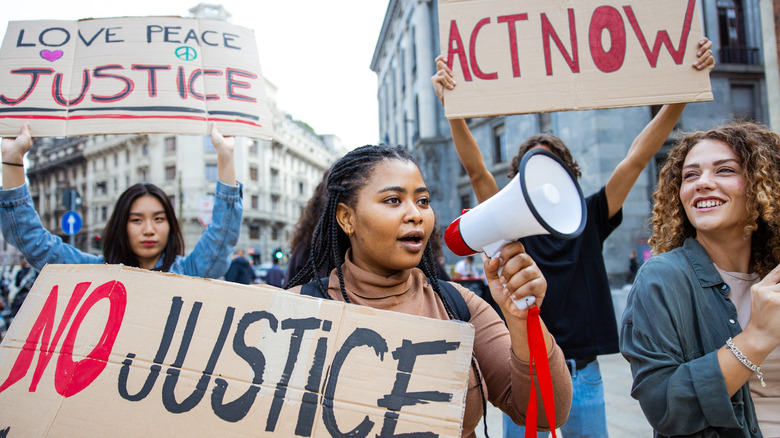
Today, June 19, 2026, the United States marks Juneteenth—a day of profound historical significance, national reflection, and vibrant celebration. Commemorating the day in 1865 when Union troops arrived in Galveston, Texas, to enforce the Emancipation Proclamation and ensure that the last enslaved Black Americans were freed, Juneteenth is a testament to resilience and the hard-fought triumph of liberty.
Yet, as we gather for community festivals, reflect during the “Civic Season,” and listen to the stories of our past, we must also confront a sobering reality: the promise of freedom delivered on that day remains fundamentally incomplete. Freedom without equitable access to justice is a hollow victory. In 2026, the systemic barriers that persist in the American legal system serve as a stark reminder of the unfinished work of equal justice.
The Legacy of Inequity in the Legal System
The abolition of slavery did not erase the deep-seated racial prejudices embedded within American institutions; it merely forced them to evolve. From the Black Codes and Jim Crow laws to redlining and mass incarceration, the legal system has frequently been wielded as a tool of oppression rather than a shield of protection for Black Americans and other marginalized communities.
Today, while the laws on the books may profess equality, the application of those laws tells a different story. The justice gap in America is wide and devastating. It is a gap defined by resources, race, and zip code. When individuals face life-altering civil legal crises—such as eviction, foreclosure, debt collection, or child custody disputes—they are not guaranteed the right to an attorney.
Consequently, millions of low-income Americans navigate complex, adversarial courtrooms completely alone. The outcomes are tragically predictable. Without legal representation, families lose their homes, predatory lenders strip away hard-earned wealth, and systemic cycles of poverty are reinforced. This lack of access to civil justice disproportionately impacts Black and Brown communities, continuing a historical legacy of disenfranchisement.
The Criminal Justice Toll
The disparities are equally glaring, and often more visible, within the criminal justice system. Decades of “tough on crime” policies and systemic biases have resulted in the disproportionate policing, arresting, and sentencing of Black Americans. The cash bail system effectively criminalizes poverty, holding legally innocent individuals in jail for months simply because they cannot afford to purchase their freedom.
Even after release, the collateral consequences of a criminal record serve as a permanent secondary sentence. Barriers to employment, housing, and voting rights perpetuate a cycle of marginalization that traps individuals and destabilizes entire communities. True emancipation requires dismantling these structural traps and replacing them with systems rooted in restorative justice and rehabilitation.
Civic Season: Moving from Reflection to Action
Organizations like the National Center for Civil and Human Rights have rightly positioned Juneteenth as the launchpad for the “Civic Season”—a period stretching to July 4th dedicated to engaging young adults in history, civic participation, and the pursuit of a more perfect union. It is a time to bridge the gap between acknowledging our history and actively shaping our future.
So, how do we advance the unfinished work of equal justice?
- Invest in Civil Legal Aid: We must drastically increase funding for legal aid organizations. Guaranteeing the right to counsel in critical civil cases, such as eviction proceedings, is a proven intervention that keeps families housed and communities stable.
- Support Systemic Reform: We must advocate for the abolition of the cash bail system, the end of mandatory minimum sentencing, and the expansion of expungement and record-sealing programs to allow individuals to truly re-enter society.
- Empower Community Paralegals: Grassroots legal empowerment, educating communities about their rights and how to assert them, builds power from the ground up and demystifies the legal process.
Juneteenth is not just a look backward at chains broken; it is a clear-eyed look forward at the chains that still bind us. As we celebrate the enduring spirit of Black Americans this Juneteenth, let us recommit to the hard, necessary work of ensuring that the justice system actually delivers on the promise of its name. Freedom was the first step; equal justice is the destination.























6 Responses
https://shorturl.fm/4pQDl
https://shorturl.fm/sfXCE
https://shorturl.fm/P7GQQ
https://shorturl.fm/PVC1N
https://shorturl.fm/2D51v
https://shorturl.fm/3UvMA